The Sneaky Advantage: Why Tennis Players Are So Feared in Pickleball
Do you come from tennis, padel, badminton, squash or table tennis? Then you have every chance of becoming a very good pickleball player.
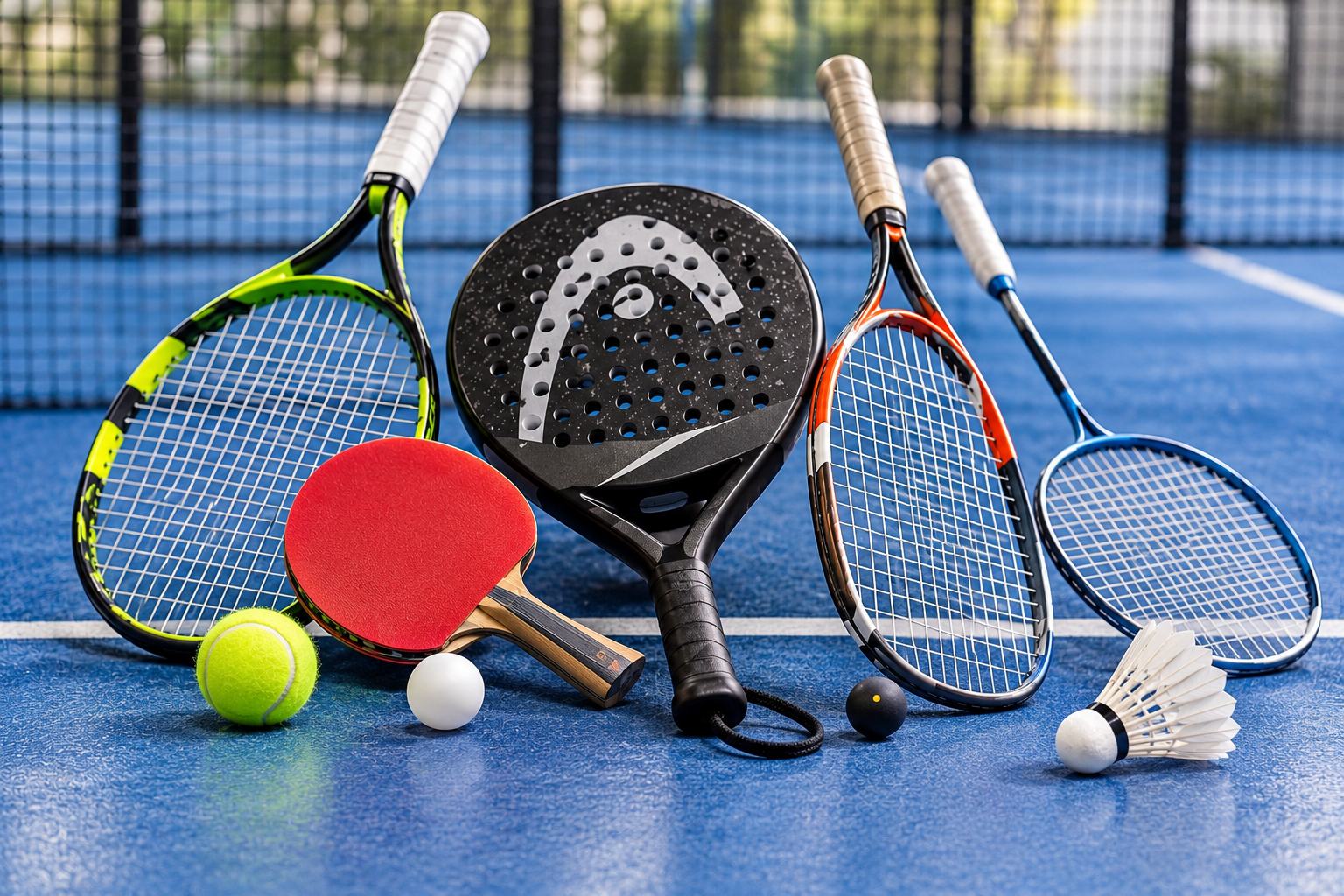
Never held a pickleball paddle before – and right after the warm-up he's smashing the ball past my ears. That, more or less, is our experience with supposed "beginners" who come from tennis or other racket sports. Grrr!
The reason: the sports are closely related. If you play tennis, padel, badminton, squash or table tennis, you already bring a lot with you: a feel for the ball, hand-eye coordination and a sense for the court.
You can see it in the details, too: pickleball is played on a court the size of a badminton doubles court, 44 × 20 feet (13.41 × 6.10 metres). And table tennis bats were already used in the very first pickleball games.
Three rules are new above all, and you'll pick them up quickly:
- The serve. With the volley serve, you hit the ball out of the air with an upward motion, below your waist. The paddle head must not be above your wrist. Alternatively, there is the drop serve: you let the ball fall without adding any force and hit it after it bounces. For this variant, the rules on the swing and contact height do not apply.
- The two-bounce rule. The serve and the return must each bounce once on the other side before a volley is allowed – that is, a shot where you take the ball straight out of the air.
- The kitchen. On both sides of the net lies the kitchen, also known as the non-volley zone. You may not stand in this 7-foot (2.13-metre) zone while volleying; the line counts as part of it. Your momentum after a volley must not carry you into the kitchen either. Once the ball has bounced, you may play it there.
The result is a game in which patience and placement matter as much as pace.
Tennis
Your advantage: Footwork, game sense and – if you play doubles – teamwork. You quickly find your way around the court and read the game. A good slice is a weapon in pickleball, too.
What's different: Big backswings and too much power can quickly lead to errors on the smaller court. Compact swings and the ability to take pace off the ball are what count. Especially important is the third shot drop: a soft third shot of the rally that should land in your opponents' kitchen. It buys you time to move up to the kitchen line. The underhand serve also feels strange at first.
Padel
Your advantage: Padel is almost always played as doubles, and pickleball very often is too. Both revolve around play at the net. You know how to split the court with a partner, you read the game quickly and you already serve underhand. A solid paddle without strings is familiar to you as well.
What's different: There are no walls: you can't let a ball come back off the back wall first. And at the net, the kitchen holds you back: padel has no comparable zone that restricts your position when volleying.
Badminton
Your advantage: The court has exactly the outer dimensions of your badminton doubles court, so the dimensions feel familiar from the start. On top of that come quick reflexes at the net and your feel for short shots.
What's different: In badminton, you always play the shuttle out of the air. In pickleball, you first have to let the serve and the return bounce. After that, you can choose between a volley and a shot after the bounce – as long as you respect the kitchen rule. The net is also much lower. For short, soft shots, a calm paddle action helps more than a powerful flick of the wrist.
Squash
Your advantage: Ball feel, touch and quick first steps. You're used to mixing short and long balls and reacting in a tight space.
What's different: There are no walls to bring into play. Instead of playing the ball against the front wall, you have to place it over a net into your opponents' court. That changes the trajectories and your choice of shots.
Table tennis
Your advantage: Short swings, fast hands and spin. At the kitchen line, where teams trade fast volleys at close quarters, these skills can help you. You're used to switching quickly between forehand and backhand, and you have experience reading spin and using it yourself.
What's different: Instead of standing at the edge of a table, you're on a court. You cover longer distances and coordinate with your partner in doubles. And there are unfamiliar shots such as volleys and overheads.
And with no previous experience?
You don't need experience from another racket sport to learn pickleball. The basics are quickly explained, and much of it develops as you play. And if a supposed beginner starts smashing the ball past your ears right away: go ahead and ask what they used to play.
Sources
- USA Pickleball: What is Pickleball?
- USA Pickleball: Pickleball Rules Summary
- PPA Tour: Padel vs. Pickleball
- Paddletek: Pickleball Paddles for Table Tennis Players
- Pickleball Canada / Nich Rush: What to expect if you're a tennis, squash, badminton, or racquetball player